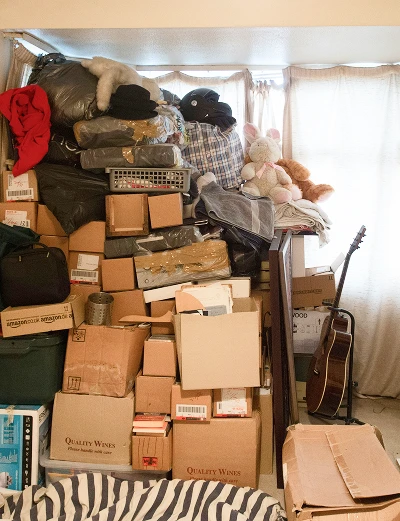
Before donating... Is it worth selling? Here's how to tell.



You're mid-declutter, about to toss something into the donate pile, and a thought creeps in: wait — is this actually worth throwing it on Marketplace? Can I make some money off of this?
It's a fair question. Most people default to donating because figuring out resale value feels like its own research project — and honestly, most of the time, donating is the right call. But every so often, something you were about to give away for free could've put real money in your pocket instead.
Here's a quick framework to help you sort it out before you load up the car.
Rule one: new or new with tags? Always try to sell first.
This is the easiest call in the book. If something is brand new, still has tags, or has barely been used — there's almost always a buyer for it, regardless of category. Doesn't matter if it's a sweater, a kitchen gadget, or a toy. "New" sells. Don't overthink this one.
Things you'll actually be able to get money for
This list covers the categories where resale value tends to show up — often in places people don't expect. We'll be doing deeper dives on several of these in future posts, so consider this your starting map.
- Camera gear — Even old, outdated, or non-working cameras and lenses hold value. Collectors and photographers buy older equipment for parts, repairs, or display.
- Designer or recognizable brand clothing — Anything with a name buyers actively search for.
- Vintage clothing — Pieces from the 1960s through the early 2000s, especially with specific labels or eras that collectors look for.
- Sneakers and athleisure — Consistently high demand, especially limited releases or popular brands.
- Maternity and plus-size clothing — An underserved category. Buyers need it temporarily and actively seek it secondhand, but supply is historically low.
- Modern electronics — Phones, laptops, tablets, and gaming consoles from the last few years, especially if functional and complete with accessories.
- Vintage electronics — Old Apple computers, retro gaming handhelds, cassette and vinyl players, and other nostalgic tech.
- Mid-century modern and designer furniture — A category with serious collector demand.
- Vintage or antique furniture generally — Especially solid wood pieces with some age and character.
- Vintage kitchenware — Cast iron, Pyrex, and other collectible cookware (working or not).
- Art and decor — Original art, signed prints, vintage posters, mirrors, and statement lighting.
- Collectibles and memorabilia — Sports, music, and pop culture items.
- Musical instruments — Even ones that have been sitting unused for years.
- Tools — Quality brand power tools and hand tools hold value well.
- Jewelry and watches — Even costume jewelry can be worth something depending on the brand or era.
What's probably not worth your time
Just as important as knowing what to sell is knowing what not to bother with. Trying to sell the wrong things can cost you more time than it's worth — between photographing, listing, answering messages, and coordinating pickup or shipping, a $5 sale often isn't worth the hour it takes.
Here's what typically falls into that category:
- Fast fashion basics — Items from brands built around high volume and low cost. There's so much of this already in circulation that resale demand is minimal, even in good condition.
- Generic, no-name household items — A plain ceramic mug, a basic plastic storage bin, an unbranded picture frame. Nobody is searching for these specifically.
- Worn-out basics — T-shirts, socks, everyday kitchen towels — anything that was inexpensive to begin with and shows real signs of use.
- Electronics in "the dead zone" — Devices that are too old to be current (can't run modern software, missing ports, slow) but not old enough to be vintage. A 7-year-old laptop or a mid-2010s TV usually falls here. Nobody wants it yet, and nobody wants it again for another decade or two.
- Flat-pack or particleboard furniture — Even big-box furniture that looks fine in your home often has near-zero resale value. It's heavy, hard to move, and buyers know it won't last.
- Anything broken that isn't a "for parts" category — A cracked plastic toy or a broken kitchen gadget isn't going to sell. (Cameras and some electronics are the exception — see above.)
If something falls into this list, donating or recycling it is genuinely the better move. No need to force a sale that isn't there.
The sweet spot: new or vintage — not much in between
Here's the pattern that ties all of this together: most items follow a U-shaped value curve. They're worth the most when they're brand new, lose value steadily for years, hit a low point, and then — for the right categories — start gaining value again once they're old enough to be considered vintage or retro.
The dip in the middle is real, and it's wide. A 5-to-15-year-old version of almost anything — clothing, electronics, furniture, appliances — tends to be the hardest to sell. Too old to be current, too new to be interesting.
So when you're evaluating an item, ask: is this new (or close to it), or is this old enough to have crossed into vintage territory? If it's stuck in the middle, donating is usually the right call — and that's completely fine.
The quick gut-check framework
When in doubt, run an item through these questions in order:
- Is it new, or new with tags? → Try to sell it.
- Is it a recognizable brand or name people search for? → Worth checking resale value.
- Is it old enough to be considered vintage, and does it fall into one of the categories above? → Worth a quick look before donating.
- None of the above? → Donate or recycle it. No shame in that — that's most of what we own.
What if it's not worth selling?
Then you're in good company — most of what we own falls into this bucket, and that's exactly what donation and recycling exist for.
Whether something is worth selling or not, the goal is the same: keep it out of the landfill and get it somewhere it can actually be used. That's what Ditch is built for — whether you're looking for the right resale platform for that vintage camera, or the right donation center for everything else.
We'll be doing deeper dives into specific categories soon — starting with the ones people are most surprised to learn have value. Stay tuned.