The business of doing good: Why we’re building ditch
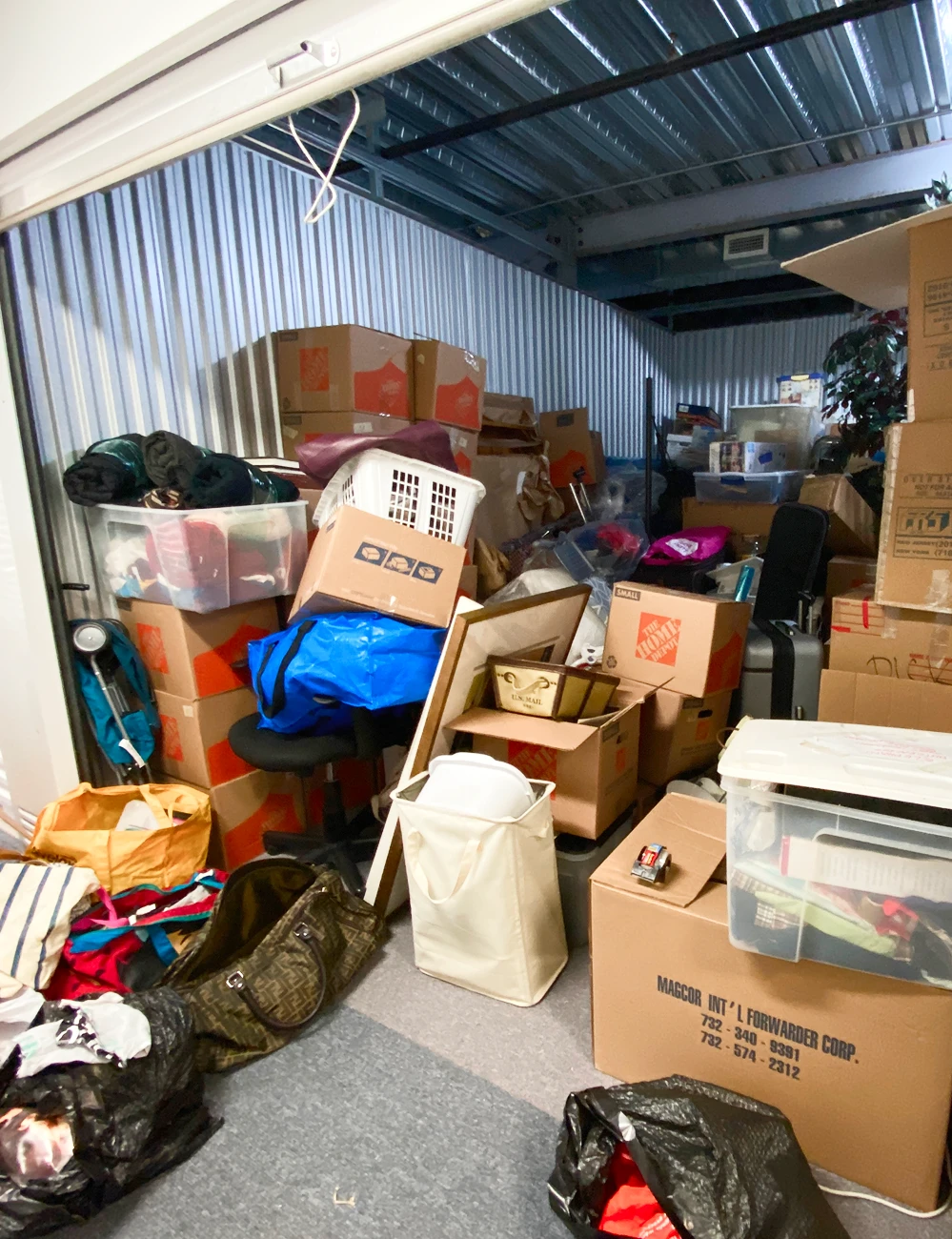


After my parents got divorced a few years ago, they sold our childhood home and packed twenty years of a family's life into two garage-sized storage units.
Embedded in my parents was the typical third-world immigrant mentality. They came from a country where most had nothing, so in America, they kept everything. Bed sheets still in the packaging from a Macy's sale years ago. Party decorations from celebrations long past — "we might use them for another party." Baby toys saved for a cousin or a neighbor's kid who didn't end up wanting them. A household's worth of stuff accumulated the way immigrant households do: carefully, gratefully, and with the deep belief that you never know when you might need something again.
Being in my early twenties with both of my siblings out of state, I felt a responsibility land on me. Not just to help my family move forward — but to relieve my mom of the financial and emotional weight of two storage units she was paying for every month, full of things she no longer needed but somehow still couldn’t get rid of.
After a few months of commuting back to New Jersey from New York on weekends, crouched in the crevices of a fluorescently lit box labyrinth stacked to the ceiling, I realized I had barely made a dent. Every time I raised that rolling sheet door, the same tall wall of boxes stared back at me. Hours and hours of work, and it barely showed.
The thing that made it so exhausting wasn't just the volume — it was the research. Every item felt like its own project. This place does pickup, but only for certain zip codes. That charity does mail-in, but only for specific brands. Craigslist is free but feels like a gamble. This marketplace takes a cut. That donation center doesn't take electronics. The other one doesn't take furniture. Nothing was in one place. You'd spend an hour figuring out where one box of stuff could go — and that was before you'd even moved anything.
As the months went on, each storage bill that hit felt like a small defeat. I'd sigh every time I raised that door and the wall was still there. Followed by the dim realization that the math wasn’t mathing — it cost more to store those things over time than it would have to just replace all of it new.
Turns out, this isn't just my story.
The more I dug into it, the more I realized what I was dealing with wasn't unique to my family or the immigrant experience. It's almost universal.
54% of Americans are overwhelmed by the amount of clutter they have — and 78% have no idea what to do with it or find it too complicated to deal with. Most people aren't hoarders. They're just stuck. They want to do the right thing — 86% try to donate to charitable organizations, friends, or resale shops — but 64% struggle to even know whether their items are donatable in the first place.
So the stuff sits. And eventually, too much of it ends up in the trash.
The scale of what that actually means is staggering. Americans throw out more than 12 million tons of furniture every year — over 9 million tons goes straight to a landfill. We generate nearly 8 million tons of electronic waste annually, more than almost any other country on earth. The average American throws away 81 pounds of clothing a year, contributing to an estimated 11.3 million tons of textile waste.
This isn't just a furniture problem, an e-waste problem, or a clothing problem. It's an everything problem.
And here's the part that gets me: we live in a world where you can have almost anything delivered to your door in two days — sometimes two hours. The infrastructure to acquire things has never been more frictionless in human history. But responsibly getting rid of something? That's still an ordeal. Hours of tabs open, phone calls, conflicting information, and ultimately giving up and dragging it to the curb or tossing it in the garbage.
We've made getting stuff absurdly easy. Getting rid of it responsibly is still a part-time job. That imbalance is the whole problem.
What's worse? Nobody declutters when life is easy. We get rid of stuff at the hardest moments.
A parent passes away and you're managing an entire household while grieving. Your kids grow out of three sizes of clothing in a year and you're already exhausted. Your dream job opens up across the country and you have six weeks to pack up your life. You finally buy a house and everything from your apartment doesn't fit. Life happens, and when it does, you're suddenly trying to move a mountain of stuff with very little time and even less bandwidth.
It's no wonder so much ends up in the same five donation centers, on the curb, or in the trash. When you're under pressure, you take the path of least resistance. And right now, for most people, the path of least resistance is a dumpster.
The list
Between work, life, and going back and forth between New York and New Jersey, it took me four years to get my mom's two storage units down to one. Another year to downsize that one into something smaller — which is now just family memories and things we actually want to hold onto.
But while I was doing it, I started keeping a list. Everywhere I found to send things: P2P marketplaces, donation drop-offs, thrift stores, resale platforms, specialty recyclers, programs I'd never heard of until I needed them. It became a personal challenge — keeping as much of my mom's stuff as possible out of the landfill. Things that meant something to her. Things that could mean something to someone else.
What started as a note in my phone turned into something I kept coming back to. Every move, every life change, every time I needed to get rid of something, the list got longer. And every time I used it, I thought about all the people dealing with the same thing who had no idea any of these options existed.
Since then, life has kept happening. Several moves. Getting married. Buying a house. Having a kid. I've gotten a lot of use out of that list. And for a long time I thought — someone should really do something with this.
That time is now.
What we're building
What started as that list — every place I found to send something during those years of clearing out the storage units — is now the basis of what we're building. Donation centers, thrift stores, resale platforms, recycling programs, specialty drop-offs for the things that don't fit anywhere obvious. Places I only found because I had the time and stubbornness to look.
Most people don't have that time. And they shouldn't have to.
The causes are out there. The organizations doing incredible work — helping families furnish their first homes, keeping electronics out of landfills, getting clothes to people who need them — they exist. The platforms where someone would genuinely love your old couch and come pick it up the same day exist. The infrastructure is there. It's just invisible, fragmented, and impossible to navigate when you're already stretched thin.
Ditch puts it in one place. Organized by what you have, where you are, and what matters to you. So that finding the right home for your stuff takes minutes — not an afternoon of dead ends.
The goal was never to guilt anyone into being more sustainable. It's just to make doing the right thing as easy as the alternative. Because right now, throwing something away is still easier than finding it a better home. That shouldn't be true.
That's what we're fixing. And we're calling it Ditch for good for a reason. You're ditching for the good of your home. For the good of the causes that need what you have. For the good of the planet. And yeah — you're getting rid of it for good. That's the whole idea
Come ditch with us, for good.
Sources: Decluttr / NAPO Survey (PR Newswire); Talker Research / College HUNKS Hauling Junk & Moving Survey; U.S. Environmental Protection Agency — Furniture & Textile MSW Data; PIRG.org / UN Global E-waste Monitor 2024; Columbia Climate School.