The mental load of too much stuff (and how to do something about it)
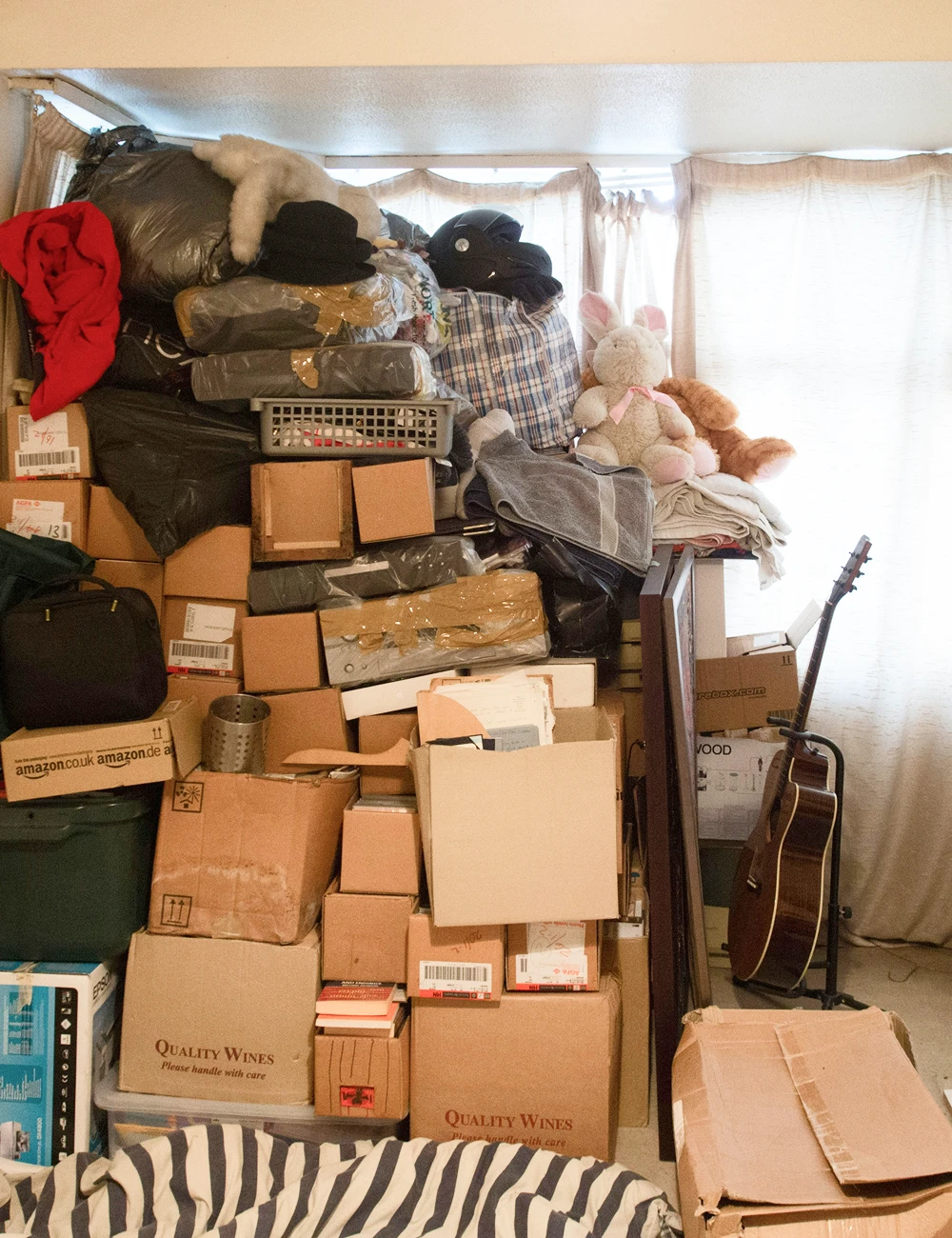


Have you ever walked into your own home and instantly felt... off?
Not because anything is explicitly wrong, but just a low-grade heaviness you can't quite name. A random pile of papers in the corner you’ve trained yourself to stop "seeing." A closet you actively avoid opening. A bedroom that somehow makes you feel more tired instead of rested.
If that sounds familiar, you are not losing your mind. And you are definitely not alone.
It turns out there is hard science behind why clutter weighs on you the way it does. That feeling doesn't go away just because you’ve gotten really good at ignoring the mess. Here is exactly what is happening inside your brain when your space gets overwhelmed—and how to finally break the cycle.
Your brain never actually stops looking at it
Here’s the thing about clutter: even when you think you’ve tuned it out, your subconscious is forced to stare at it.
A landmark study from Princeton University’s Neuroscience Institute found that physical clutter literally fights for your attention at a neurological level. When multiple objects are crowding your vision, they are actively competing for your brain's processing power. Your mind has to work overtime to filter out the noise, whether you realize it or not.
The result?
- Mental fatigue: You feel drained without a clear reason why.
- Focus failure: You sit down to relax or work, but your mind keeps wandering.
- Passive draining: That pile of random mail on the counter is quietly burning up cognitive fuel you desperately need for other things.
It is literally changing your body chemistry
It goes way deeper than just feeling distracted. Clutter can actually alter your hormones.
Researchers at UCLA studied everyday families and found a direct link between a cluttered home and elevated levels of cortisol—the primary hormone your body pumps out when you're stressed. The people in the study who described their homes as messy or cluttered showed stress profiles consistent with chronic stress, alongside higher rates of a depressed mood throughout the day.
Let that sink in: chronic stress. The exact same physiological survival response your body has to genuinely threatening situations is being triggered by the laundry mountain on "The Chair."
The Hidden Mental Cost of a Cluttered Home
This hits even harder if you're someone who manages what psychologists call the mental load — the invisible, exhausting cognitive job of noticing what needs to be done, planning how to do it, and tracking the execution. When you look at a mess, you aren't just seeing objects. You are running a background program calculating what needs to happen, who needs to do it, and when you're going to find the time.
Research backs this up. The UCLA study found that while cluttered homes elevated cortisol in women, men in the same households showed largely normal stress hormone levels. Researchers believe this disparity is tied directly to the mental load — because women are more likely to register clutter not just as mess, but as a to-do list. Every pile is an unfinished task. Every overcrowded closet is a problem to solve. That mental math runs in the background constantly, and it is exhausting — whether you're consciously aware of it or not.
It’s affecting more than just your mood
If you think this is just about stress, it gets worse. A massive study published in the Journal of Environmental Psychology tracked over 1,600 adults and found that high clutter levels directly predicted lower overall life satisfaction and higher rates of self-critical thinking.
Other research has connected chaotic environments to:
- Disrupted sleep (it’s hard to rest when your brain senses a "to-do list" surrounding your bed).
- Poorer eating habits (one study found people in messy, chaotic kitchens ate significantly more junk food).
- Tanked productivity.
This isn't about being messy, disorganized, or lazy. It is a documented biological reaction to your environment.
So why is letting go so incredibly hard?
When you’re beating yourself up for not "just cleaning it up," remember this: holding onto things is deeply human.
Dr. Joseph Ferrari, a leading global expert on clutter and procrastination, has spent decades studying why letting go feels like moving mountains. His work points to three big culprits: emotional attachment, the "I might need this someday" trap, and decision fatigue.
Decluttering is hard because every single item requires a choice, and making choices takes a massive amount of mental energy. When your battery is already flashing red, deciding whether to keep or toss a pair of shoes can feel genuinely impossible. That gap between knowing you need to clean and actually doing it isn't a character flaw—it's just how human brains operate under stress.
How to actually do something about it
The good news? The relief from clearing space is almost instantaneous. People report feeling lighter, clearer, and less anxious the second even a small area is cleared. You don't need to overhaul your entire house this weekend. You just need to lower the friction.
For most people, the hardest part of letting go isn't the decision—it’s the logistics. Throwing good stuff in the trash feels wasteful. Selling things on apps takes hours you don't have. And researching which local charities take what specific items is a whole project on its own.
That is exactly why we built Ditch.
Instead of abandoning your clean-out halfway through because you don't know what to do with the boxes, Ditch helps you instantly find the right home for your things. Whether it's donation centers, specialized recyclers, or resale platforms, we aggregate it all in one place, filtered by what you have and where you are.
The goal isn't to create a perfectly sterile, minimalist showroom. It’s just to build a home that stops working against your mental health.
Frequently Asked Questions
Is clutter directly linked to anxiety?
Yes. Cluttered environments keep your body’s stress response on low-grade alert. Over time, that chronic cortisol spike can manifest as persistent worry, an inability to relax, and trouble falling asleep.
Can decluttering actually improve my mental health?
Absolutely. Multiple studies show measurable improvements in mood, focus, and a sense of personal control after decluttering—even in tiny doses. Making a definitive decision about an item breaks the cycle of avoidance that keeps anxiety alive.
Where should I even start?
Start small, and start somewhere you can see. A single drawer. One shelf. The drop-zone by the front door. The goal isn't to finish your whole house today—it's just to prove to your brain that momentum is possible. And when you're ready to actually move those boxes out of your life, Ditch will tell you exactly where to take them.
Sources: Princeton University Neuroscience Institute (2011); UCLA Center on Everyday Lives of Families (2010); Journal of Environmental Psychology (2016); Dr. Joseph Ferrari, DePaul University.